You read the back of every pack.
Good. Ours answers four questions, and every claim on this page links to its source. Check the footnotes. We want you to.
Same teaspoon, same amount of powder. The only difference is where it grew. Each dot is about 10 mg of curcumin: roughly 75 mg in usual turmeric, 210 mg in Lakadong.
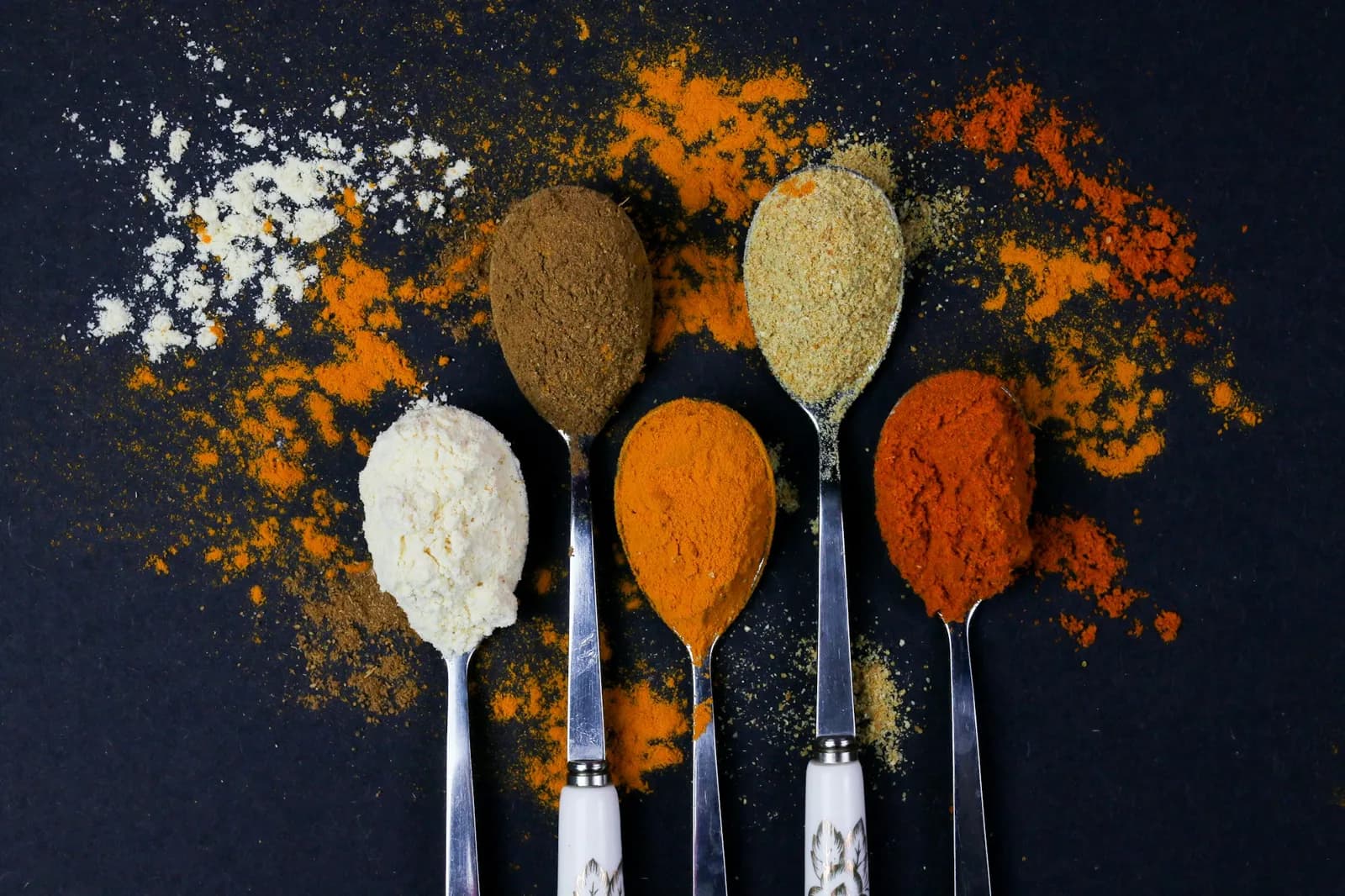
Tap the spoon. Tap again to go back.
Some sellers add lead chromate, a yellow paint pigment, to make turmeric look brighter. Stanford researchers tested 356 samples from 23 cities in South Asia. 14% had lead in them4.
You can't see it. You can't taste it. So we test every batch, and you can read the report before you buy.
| What we test | Unit | Result |
|---|---|---|
| Curcumin | % by weight | After harvest |
| Lead | mg/kg | After harvest |
| Chromium | mg/kg | After harvest |
| Cadmium | mg/kg | After harvest |
| Arsenic | mg/kg | After harvest |
| Added dyes | yes / no | After harvest |
Tested by an independent lab. Full report goes live before the pouches do.
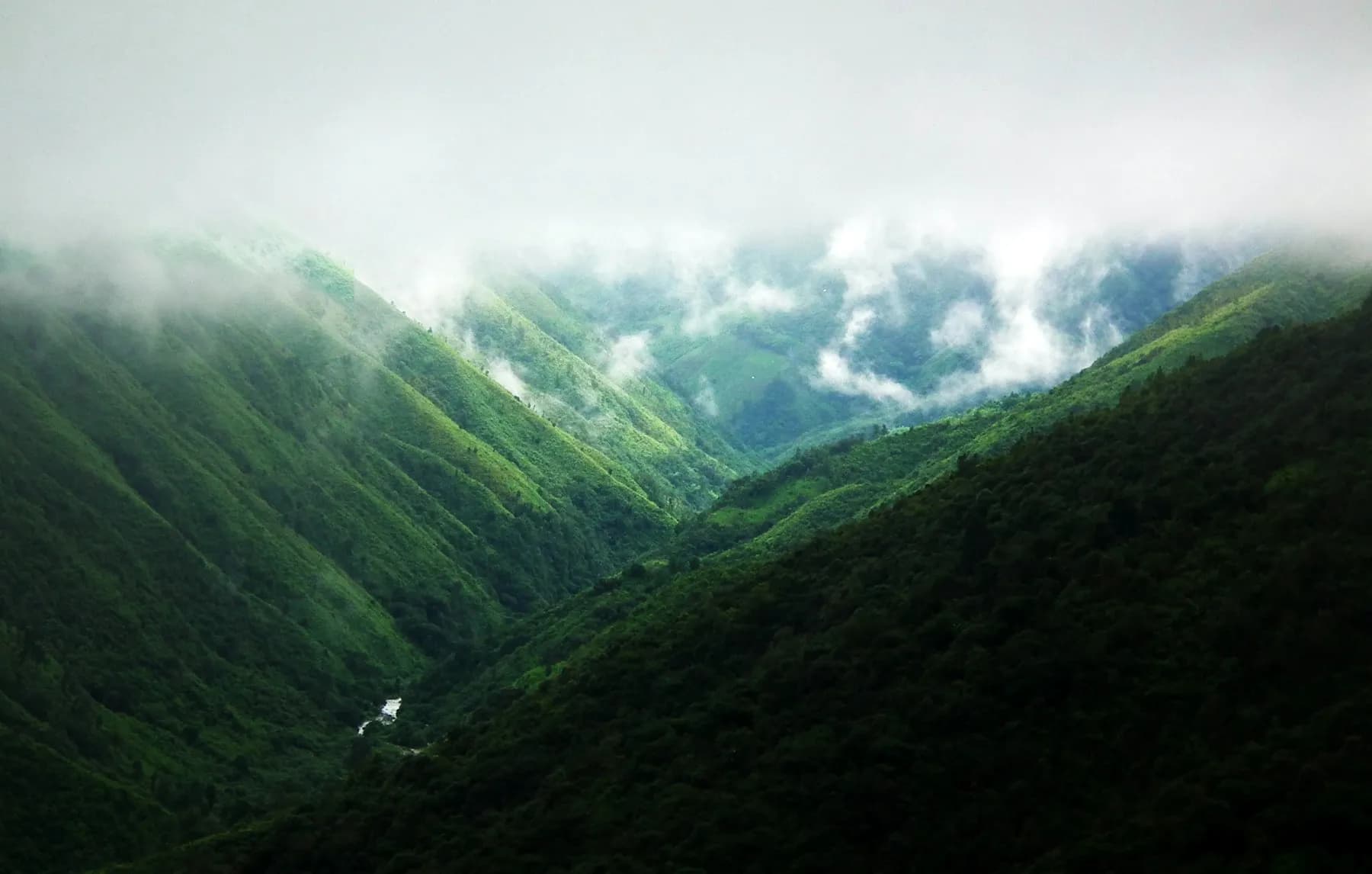 West Jaintia Hills, Meghalaya
Lakadong is an old variety from the hills of Meghalaya. Scientists at ICAR measured it at 7.0–7.8% curcumin1. In 2024 it got a GI tag. That means only turmeric from these hills can be called Lakadong5.
Other brands can copy our words. They can't copy these hills.
Good. Ours answers four questions, and every claim on this page links to its source. Check the footnotes. We want you to.
In 14 studies, people who took curcumin felt less sore after hard exercise, with lower IL-6, a sign of inflammation, in the days after.6
A review of trials found turmeric extract eased joint pain from arthritis. It won't fix knees. It's food, with more of the good part in every spoon.7
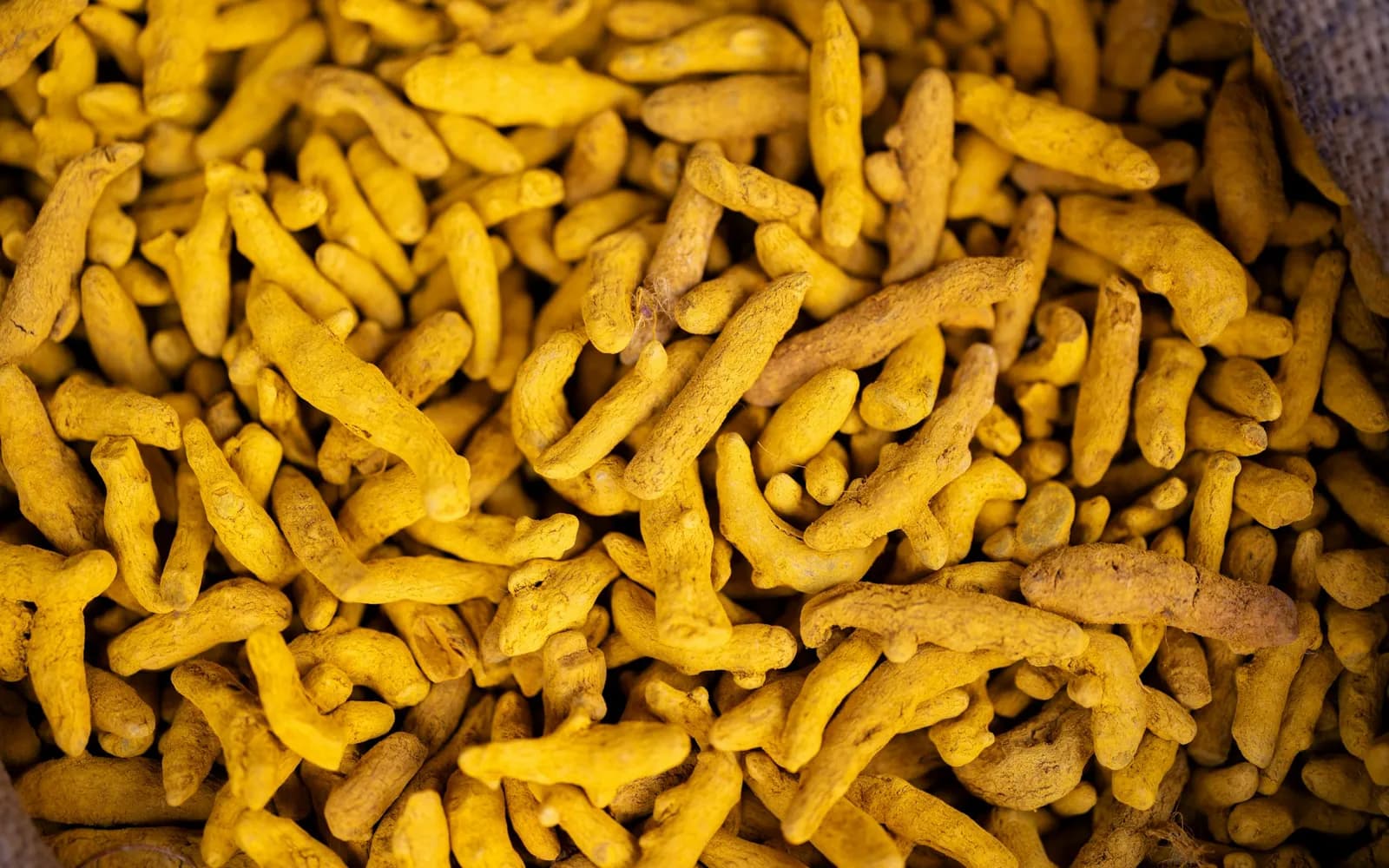
Deeper colour from the same spoon. Cook it in ghee or oil and add a pinch of black pepper: pepper helped the body take in about 20 times more curcumin.8
These studies used strong curcumin extracts, not a spoon of turmeric. Ours is food, not medicine. It just puts more curcumin in the spoon you already use.
It comes from one small region and small farms, and every batch is lab tested. That costs money. Promise 4 means we'll show you exactly where it goes.
It's food. Very good food with a lot of curcumin. Anyone who sells you turmeric as medicine is selling you a story.
Your spoon. Your counter. Your fingers. That deep colour is the curcumin. Sorry in advance.
Turmeric is harvested once a year. When the first batch is gone, the next one is a year away.
Batch report
Every pouch carries a batch code. It opens that batch’s lab report: what we tested for, what the lab found, and the legal limit next to it. Each batch’s report goes up before that batch ships.
Because every pack answers four questions: where it comes from, what the lab found, what's in it, and where your money goes. Every product we make keeps all four promises, or we don't sell it.
An old turmeric variety from the West Jaintia Hills in Meghalaya. Scientists at ICAR measured it at 7.0–7.8% curcumin. Most turmeric is 2–3%. Since 2024 it has a GI tag, so only turmeric from this region can use the name.
When it has been harvested, dried, ground and lab tested. People on the list hear before anyone else.
How much curcumin is in it. Lead, chromium, cadmium and arsenic. And whether any dye was added. Every pouch has a batch number that links to its report.
It comes from one small region, from small farms, and every batch goes to an independent lab. When we open orders, we'll show the full breakdown: what goes to the farmer, the lab, the pouch, the delivery, and us.
No. The only ingredient is ground Lakadong turmeric. No colour, no starch, nothing to stop clumping.
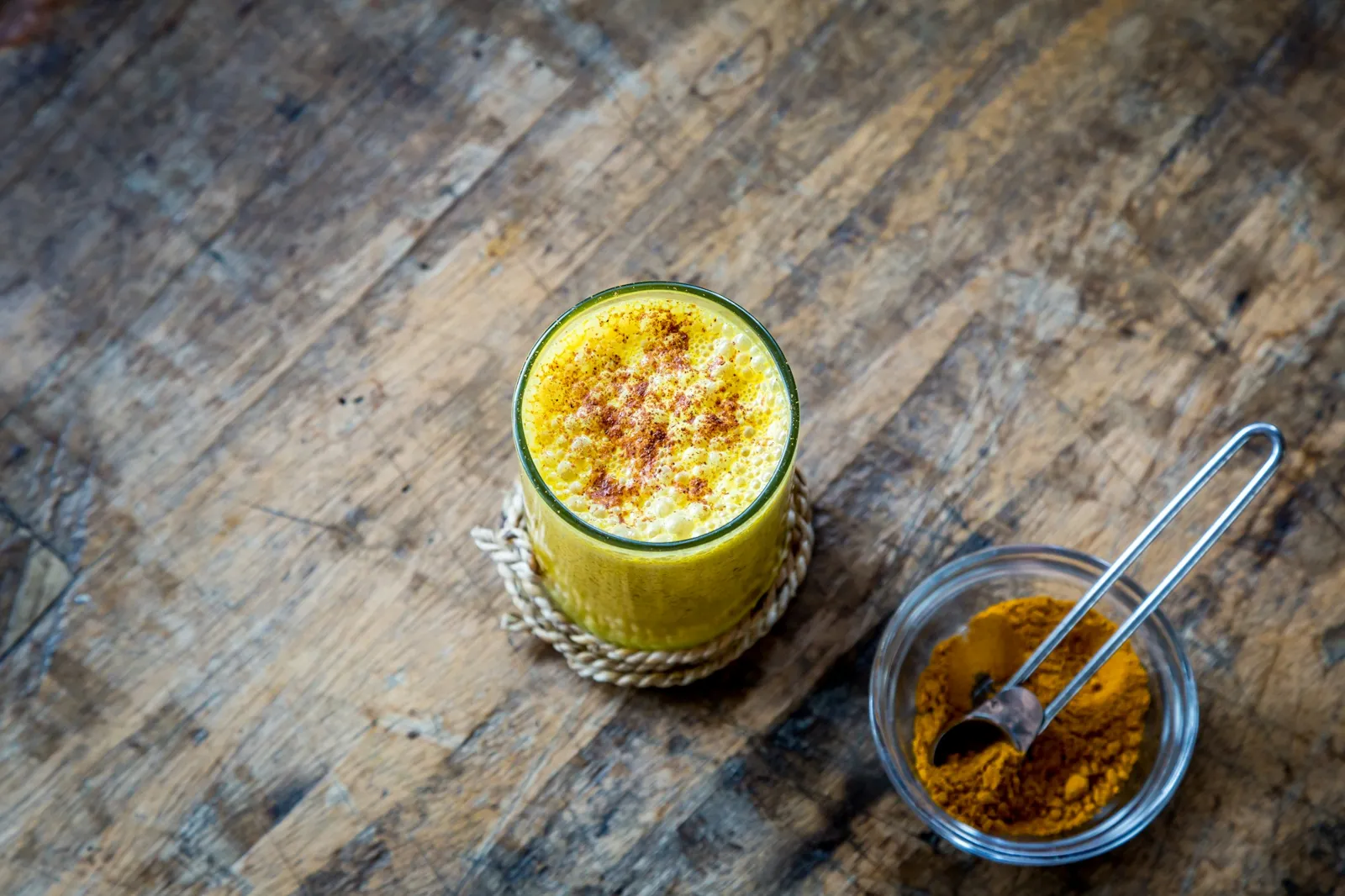
Cook it in ghee or oil, or stir half a teaspoon into warm milk. Add a pinch of black pepper. Curcumin mixes into fat, and pepper helps your body take it in.
No. It's food. If you take medicine, like blood thinners, or you're pregnant, ask your doctor before eating a lot of turmeric every day.
P.S. When a batch is tested, you’ll see the lab report before we ask you for a rupee. Batches are small, and the list hears first.